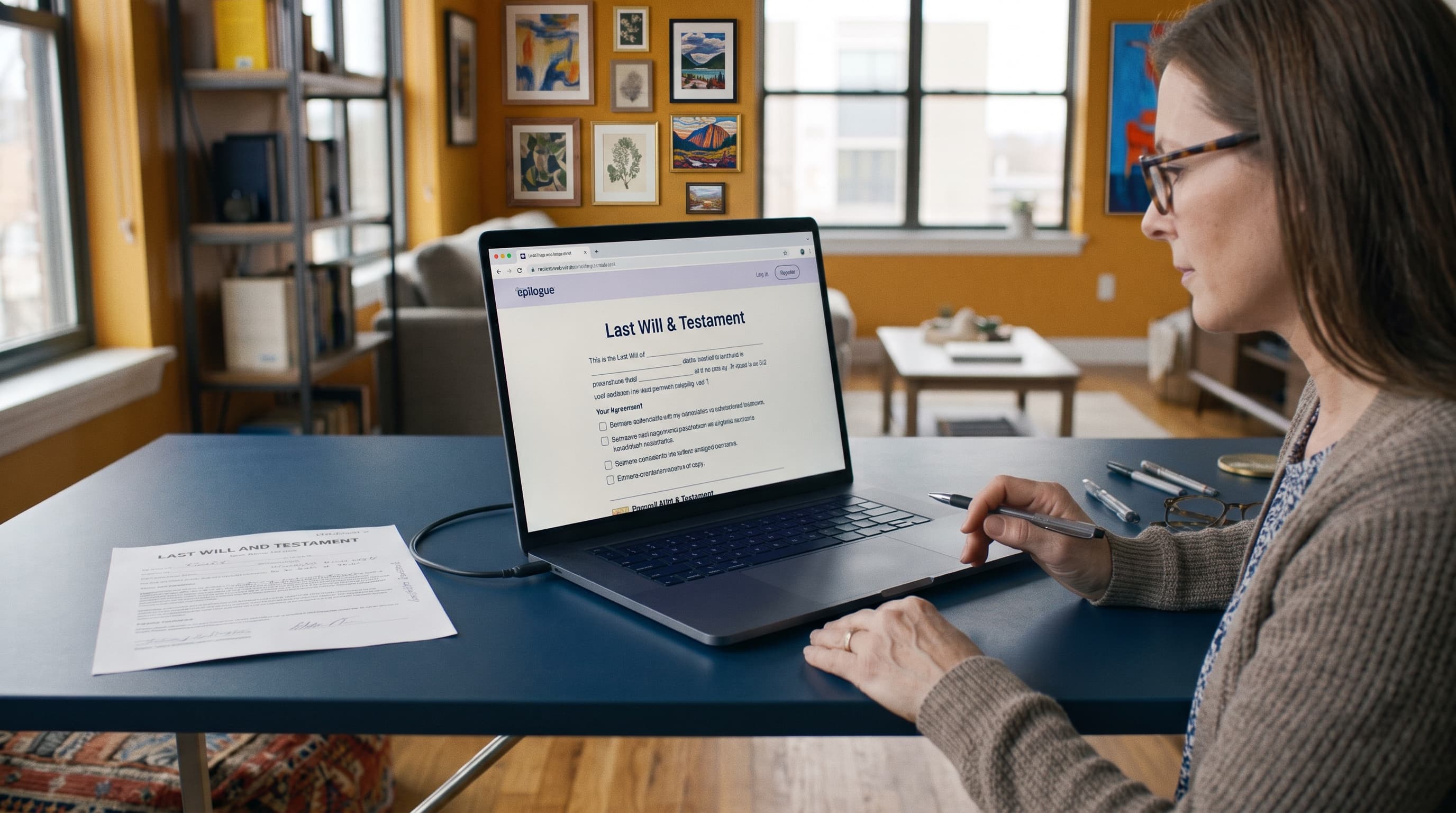
What Is Digital Estate Planning in Canada?


Digital estate planning involves deciding in advance what will happen to your online accounts and digital assets after you pass away, and recording those decisions in a place where your family and executor will find them. Planning for your digital estate involves several things, including: naming someone to manage your online profiles, making a list of your digital assets, and writing down your wishes for your digital assets as part of your estate plan.
Some major platforms, including Facebook, Google, and Apple, offer tools that let users make advance arrangements for their accounts after death. Instagram also has procedures for memorializing or removing deceased users' accounts. The options vary by platform: some allow a designated person to receive limited access to account information, while others only allow family members to request memorialization or account closure after death.
What counts as a digital asset?
A digital asset is an electronic record, account, or other form of digital or intangible property that has financial, practical, or personal value. Common examples include:
Social media profiles and email accounts
Photos, videos, and documents stored in the cloud
Cryptocurrencies
Loyalty points and rewards balances
Domain names and websites
Paid subscriptions
Monetized channels and online store accounts
Some of these items can have substantial financial value, while others carry a lot of sentimental value that your loved ones would want to preserve.
What a Will can and cannot do
A Will gives you control over how your assets (your estate) are distributed after death. However, your Will cannot distribute things you don't own. Many online accounts are governed by service agreements that restrict whether an account can be transferred or accessed by someone else after the account holder dies. In some cases, the right to use the service ends at death and there is nothing to be inherited under the Will.
A Will is still important for dealing with digital and intangible property that forms part of your estate. This may include domain names, copyright, cryptocurrency and, depending on the applicable program rules, certain loyalty points or rewards balances. The law in this area is still developing and varies between provinces, so anyone with a substantial digital estate may benefit from professional advice.
Passwords and private access keys should not be included in a Will. A Will may become accessible through the probate process, creating a security risk. Instead, access information should be stored securely, such as in a password manager with an appropriate emergency-access arrangement. Even when someone has the account holder's credentials, using them may breach the platform's terms of service.
The Social Media Will
Epilogue is the only online Will provider in Canada that includes a dedicated Social Media Will as part of its estate planning documents.
The Social Media Will guides you through common online accounts and lets you record what you want to happen to each profile after your death, including whether it should be memorialized, closed, or otherwise managed. It also identifies the person you want to carry out your instructions. The resulting document can be shared with your family and executor. It is included in every Epilogue package, and you can also create one for free on its own.
A five-step digital estate plan
Make an inventory. List your accounts and digital assets (without passwords).
Decide. Choose how you want each account or asset handled. Digital property that forms part of your estate should be addressed in your Will. Instructions about online profiles and accounts, including whether they should be memorialized or closed, can be recorded in a Social Media Will or another document kept with your estate plan.
Name someone. A "digital executor" is not a separate legal role in Canada. But if your executor is going to need help accessing or dealing with your digital assets and accounts, you may want to let them know who to reach out to for help.
Record instructions. Set up the advance planning features offered by individual platforms, such as Facebook Legacy Contacts, Google's Inactive Account Manager, and Apple's Legacy Contact. Record your wishes for other accounts in a Social Media Will.
Review regularly. Ensure that your documents always reflect your wishes.
How this fits into making a Will with Epilogue
Epilogue's online Will questionnaire takes about 20 minutes to complete. Every package includes the Social Media Will, a record of your assets and key contacts for your executor, a place for your final wishes, detailed signing instructions, and free updates for life. Plans start at $139, or $199 with incapacity documents; couples pay $269 or $329 with incapacity documents. See the pricing page for details.
For more details about how each social media platform deals with user accounts after a death, read What Happens to Social Media Accounts After Death. To prepare the rest of your Will, see What Information Do You Need to Write a Will Online.
FAQ
What is digital estate planning in Canada?
Digital estate planning involves deciding in advance what happens to your online accounts and digital assets after you pass away, and recording those decisions as part of your estate plan.
What counts as a digital asset?
Digital assets include social media accounts, email accounts, digital photos and documents, cryptocurrencies, loyalty points, domain names, subscriptions, and monetized accounts. These can have financial value, sentimental value, or both.
Can a Will give someone access to my online accounts?
A Will can authorize an executor to deal with digital assets and express the deceased person's wishes. However, it does not automatically provide unrestricted access to online accounts. Access depends on the applicable provincial law, the nature of the account or asset, and the platform's terms and policies.
Should I put my passwords in my Will?
No. A Will can become a public document through probate, and the passwords would be exposed. Using someone else's credentials (even if they aren't alive) may breach a platform's terms.
Do I need a separate Will for my digital assets?
Generally not a separate legal Will. What helps is a clear set of instructions kept with your estate plan, like Epilogue's Social Media Will.
What is a digital executor?
This is not a separate legal role in Canada, but can refer to someone you've asked to help your executor manage your digital assets and online accounts.
Disclaimer: Epilogue is not a law firm and cannot provide any legal advice. This article is for informational purposes only and may not cover all legal considerations. For complex estate planning needs, consult a qualified estate planning professional.